Monday, March 7, 2022

Weather Hazards

Severe Thunderstorms

There is no shortage of weather phenomenon that affect the ability to safely operate an aircraft.  In fact, many of the systems employed in the airframe are specifically designed and built to allow for operation in adverse and extreme weather conditions.  Anti-icing systems, heating, cooling, radar, rain removal, navigational aids, and landing systems are all designed to help the aircraft and crew negotiate the different elements of weather.

Regardless of the amount of thoughtful design and flight planning, there are some weather events that should be avoided completely.  This is the reason that Severe Thunderstorms rank as the greatest weather risk to aviation operations.

There are three main factors that must be available for a thunderstorm to form:

Moisture – Thunderstorms are more likely when the surface dew point is greater than 55 degrees Fahrenheit.

Lifting – Something must be the initial push that causes air to rise.  This could be a frontal boundary, a low-pressure system, or low-level differential heating caused by the sun.

Instability – Is caused when air rises vertically.  This can happen when a less dense air parcel moves upward through air that is more dense.

The picture above shows a cold front advancing, which starts the lifting of warm and moist air over the top of the cold air mass plowing underneath.  This creates instability as the warm air rises vertically and condenses.

Thunderstorms can come in all shapes and sizes.  A single-cell thunderstorm or a small squall line might not be that concerning, but a supercell thunderstorm (pictured above) that is ten miles in diameter, reaches 50,000 feet AGL, and lasts for over an hour, is something that grabs a pilot’s attention.  During flight planning, pilots and aircrew should find a method to circumvent this severe weather or stay on the ground.

Word Count: 298

References:

Federal Aviation Administration (FAA). (2016). Pilot’s Handbook of Aeronautical Knowledge (PHAK). https://www.faa.gov/regulations_policies/handbooks_manuals/aviation/phak/

Haby, J. (n.d.). Thunderstorm Ingredients. Weather.gov. https://www.weather.gov/source/zhu/ZHU_Training_Page/thunderstorm_stuff/Thunderstorms/thunderstorms.htm#top

Midwestern Regional Climate Center. (n.d.). Living with weather: Thunderstorms. https://mrcc.purdue.edu/living_wx/thunderstorms/index.html

Tuesday, March 1, 2022

Air Traffic Control Entities

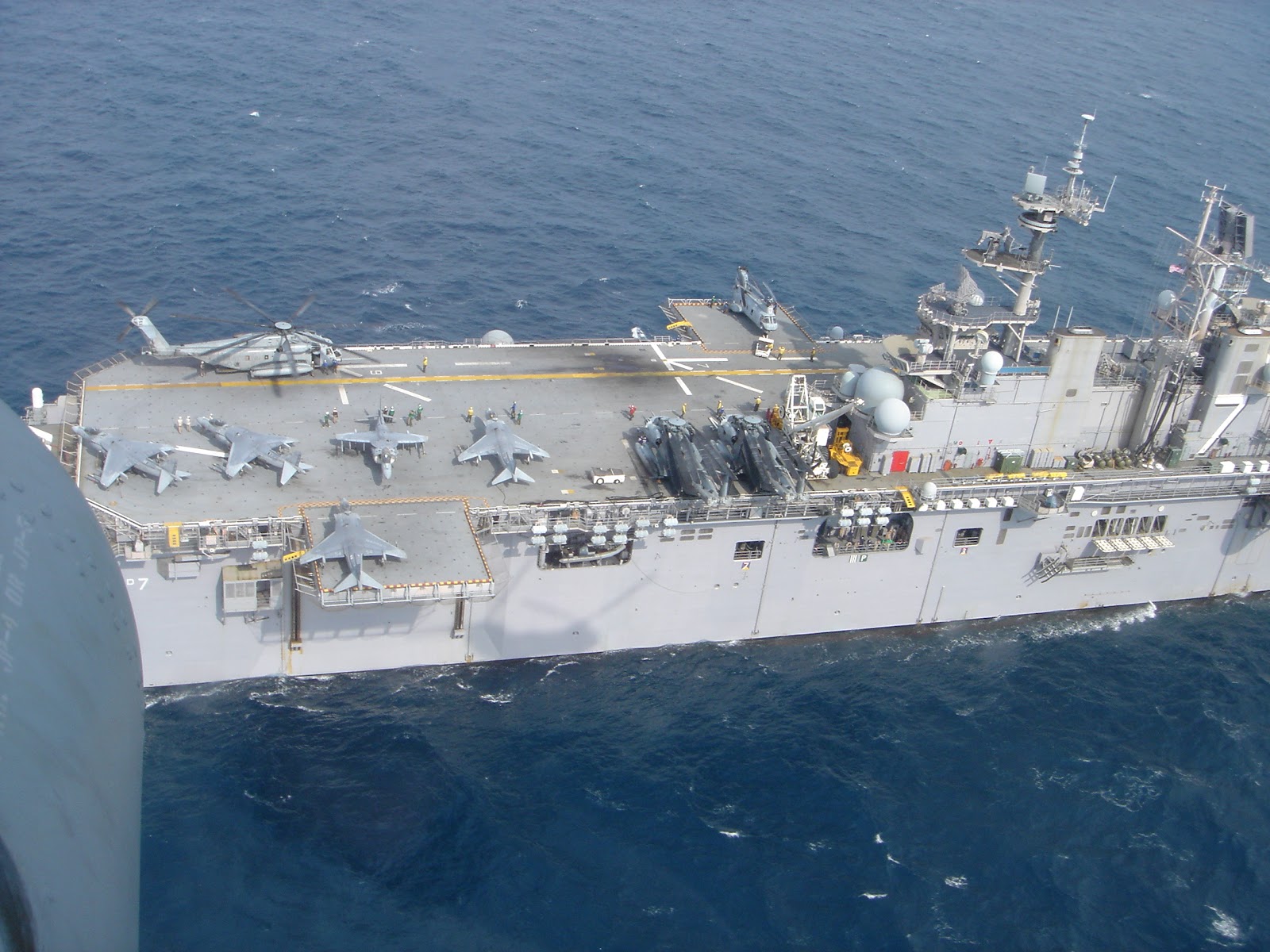
Civilian ATC and Military ATC at Sea

There are many similarities between the Air Traffic Control that manages the Controlled Airspace for Civil Airports and the Air Traffic Control that manages the Airspace around a Navy Carrier.  Civil Aviation and Military Aviation both have functions that that provide for safe air operations including:

  • Ground Control
  • Tower Control
  • Radar and Navigational Aids
  • Runway / Landing Markings and Lights
  • Automated Terminal Information Service


Many of the policies and procedures are very similar for Civil Airports and Navy Ships up until it is time to perform a landing.  Landing on the ship is the largest difference between Naval Aviation and Civil Aviation.  It takes a great deal of time and practice to land an aircraft on a moving runway or landing pad.

Typically the ships tower (or Primary Flight Control) functions as the ATC within five miles of the ship.  The Air Officer (Air Boss) and his assistant (Mini Boss) control and manage all movement of aircraft in and around the ship.  There are Sailors providing radar services, instrument approaches, and controlling the air space.  There are also LSOs (Landing Signal Officers) and LSEs (Landing Signal Enlisted) that assist the pilot in landing the aircraft on spot or to an arrested landing during their final approach.


Fixed Wing Aircraft – land with an arresting hook that catches a wire to stop the forward momentum with an arrested landing.

Rotary Wing Aircraft and VTOL Aircraft – land vertically on a spot with the assistance of an LSE or LSO to land in the correct location.

The Air Boss and Mini Boss maintain constant communication with the ship’s Captain to adjust the position of the ship to bring the relative wind off the nose of the boat to ensure aircraft are landing into the wind.  There is a benefit to being able to move the runway to suit the desired landing profile.

The aircraft and its crew must land in a very specific location to prevent damage to the ship or aircraft.  For helicopters, there are three foot squared boxes that the landing gear must be inside when landing on the ship.  The use of the LSE and the LSO is one of the main differences in final approach and landing; they are critical to meet the precise landing locations on a moving ship.


Word count: 387

References:

Allen, F. V. (2019, December 10). Meet the US Navy's new $13 billion aircraft carrier. CNET. https://www.cnet.com/pictures/meet-the-navys-new-13-billion-aircraft-carrier/

Federal Aviation Administration (FAA). (2016). Pilot’s Handbook of Aeronautical Knowledge (PHAK). Retrieved https://www.faa.gov/regulations_policies/handbooks_manuals/aviation/phak/

Navy. (n.d.). Air Traffic Controller. https://www.navy.com/careers/air-traffic-controller


Wednesday, February 23, 2022

The Airport and the Environment

Noise Pollution

Of the listed main environmental impacts (air, noise, and water pollution), it seems as though noise pollution is the most commonly addressed and complained about by the average citizen in close proximity to the airport.  While air and water pollution are very important and have a large impact on the environment, noise pollution is annoying right now.  Unwanted sound is nuisance to the senses and can rally a community in opposition to an airport and the FAA.


Airport managers struggle with the length, frequency, and cumulation of sound levels over time; so much so that they hire companies to study the effects of noise and conduct noise modeling to determine the degree to which noise will have an effect on the population.  An example in the Visser and Wijnen chapter mentioned that even socioeconomic factors are considered because noise tolerance is lower in communities that have more affluent residents. Tools like the Integrated Noise Model are standard methods to determine noise impacts from airports on the civilian community.

 
Denver International Airport, pictured above, moved from Stapleton International Airport out of Denver 25 years ago due to noise issues and safety concerns.

Many airports have decided to move out of built up areas, such as large cities, to avoid the noise impacts to residents in housing communities.  However, Denver International Airport is now being surrounded by housing developments as the suburban areas around Denver expand.  Despite safety warnings and warnings of noise issues, the surrounding cities of Aurora and Commerce City continue to build.  This trend is repeated over and over in many cities like those surrounding DFW International Airport and those Airports in Southern California.


A potential solution is to move 50+ miles from any city and then refuse development of any land within the airspace.  Transportation to and from the terminals could be provided through the use of high speed rail or high speed train.  The Shinkansen in Japan travels nearly 200 miles an hour.  Something like this option would enable transportation in a fraction of time of the normal vehicle airport commute, while allowing for appropriate standoff for noise pollution.

Word Count: 359

References:

Aguilar, J. (2020, January 12). Denver airport warns of development “creep” as Aurora gives blessing to new houses nearby. Denver Post. https://www.denverpost.com/2020/01/12/dia-aurora-development-runway-noise/

Federal Aviation Administration (n.d.). The FAA Airport Noise Program. https://www.faa.gov/newsroom/faa-airport-noise-program

Gallagher, T. (2021, November 16). Noise pollution: How are airports and airlines addressing the issue?. Euronews.next. https://www.euronews.com/next/2021/11/16/noise-pollution-how-are-airports-and-airlines-addressing-the-issue

Visser, H., & Wijnen, R. (2008). Management of the environmental impact at airport operations. Nova Science Publishers, Incorporated.


Tuesday, February 15, 2022

Legislative Acts

Air Traffic Control

The establishment of the Air Traffic Control Systems Command Center on July 29, 1970 was an important piece on legislation by the Federal Aviation Administration.  In the early days of aviation in the United States, aircraft controllers used immature means to track aircraft and routes.  The inability to communicate with aircraft over radio and tracking aircraft manually on maps and blackboards led to many high-profile accidents in the 1930s.


In the 1960s, the Federal Aviation Administration pressed to modernize the current air traffic control system.  The goal was to automate the manual system to an automated radar traffic control system (ARTS).  The Air Traffic Control Systems Command Center (ATCSCC) integrated the following:

  • Central Flow Control Facility 
  • Airport Reservation Office
  • Air Traffic Service Contingency Command Post
  • Central Altitude Reservation Facility

Today, the ATCSCC seeks out issues and provides solutions to mitigate inefficiencies that are identified in the National Air Space System (NAS).  The ATCSCC uses traffic management initiatives to manage air traffic through the using and monitoring:

  • Ground Delay Programs
  • Ground Stops
  • Airspace Flow Programs
  • Weather
  • Equipment Outages
  • Runway Closures
  • National Emergencies


Looking to the future of aviation, the ATCSCC is preparing for regulation and control of space operations and operations including unmanned aerial vehicles.  All these desires to operate in new areas will require control of airspace and routes and an all-encompassing system to track and monitor future air traffic.

In conclusion, if not for the creation of the Air Traffic Control Systems Command Center it would be unlikely that the airline industry could operate inside the United States with the current safety record.  The complex network of Air Route Traffic Control Centers, Terminal Radar Approach Control Facilities, and Air Traffic Control Towers rely on the ATCSCC to help manage the nation’s air traffic and make improvements to balance constraints on the NAS .

Word Count: 307

References:

Air Traffic Control Tower Operators, 14 C.F.R. § 65 (2022).

Federal Aviation Administration. (n.d.). A brief history of the FAA. Retrieved February 15, 2022, from https://www.faa.gov/about/history/brief_history

Federal Aviation Administration. (n.d.). Air Traffic Control System Command Center. Retrieved February 15, 2022, from https://www.faa.gov/about/office_org/headquarters_offices/ato/service_units/systemops/nas_ops/atcscc


Tuesday, February 8, 2022

Team-Based Human Factors Challenges

 The Infamous Tow Crew

    Human Factors in aviation could be described as the study and application of human capabilities and limitations when interfacing with information technology, equipment, aircraft, and other people.  The FAA has a much more complicated definition that can be found at the site referenced below, but it centers around what humans can do and the limitations they have while carrying out their work (FAA, n.d.).

Towing aircraft is a team sport and I would consider it a team-based aviation activity.  It is a process that is repeated so often, that it can become monotonous, boring, and is often viewed as trivial.  Despite aircraft towing being so simple and monotonous, tow mishaps are a leading cause of Class C (accidents that cost between 50k and 500k dollars) mishaps in Naval Aviation (Eckstein, 2018).


Why do we run aircraft into inanimate objects in the military and civilian sector?  For many reasons:
  • Failure to maintain situational awareness.
  • Lack of tow driver experience.
  • Lack of brake rider experience.
  • Many tow events take place during the night check.
  • Failure to sound alarm ahead of impacts due to inexperience and fear of reprisal.


There are six individuals required to tow most aircraft in Naval Aviation.  They include a tow director, a tug driver, a brake rider, two wing walkers, and someone to watch the tail of the aircraft.  

These are some of the steps that have been taken to ensure tow evolutions are conducted safely and to minimize human factors that can cause mishaps:
  • Tow Brief conducted with Maintenance Control and Quality Assurance before all aircraft movements.
  • Ensure all people know their job and what is required.
  • Ensure qualification and certification of every person before each movement.
  • Use more senior maintainers during complex movements.
  • Increase supervision during night check towing evolutions.


By understanding the task at hand and briefing all potential challenges and risks in each tow evolution, many of the human factors that could induce risk can be mitigated.

Word Count: 325

References:

Airplanes from the desk of Jesse. (2019, August 10). Aircraft Towing. http://www.libyanarabairline.com/aircraft-towing/

Eckstein, M. (2018, June 22). Less experienced maintainers contribute to rise in Naval Aviation mishaps. U. S. Naval Institute News. https://news.usni.org/2018/06/22/less-experienced-maintainers-contribute-rise-naval-aviation-mishaps

Federal Aviation Administration (FAA). (n.d). The Role of Human Factors in the FAA. https://www.hf.faa.gov/role.aspx


Wednesday, February 2, 2022

Aviation Security

The Next Threat for the TSA

Upon completion of the readings this week for module four, one can see how much time and effort has gone into making airline travel safe.  It is hard to truly grasp how much has been done, without having an understanding of how things were prior to September 2001.  After a review of the TSA website, specifically the historical timeline, it is clear how many adjustments the TSA has made to combat:

  • Bomb threats and attempts
  • Plans and attempts to hijack aircraft
  • Smuggling of people and hazardous cargo

With so many layers of security added, it has been difficult for some of the typical bad actors to impose their will in the current environment.  Because the TSA has become so efficient at keeping most bad issues at bay, an emerging threat has come from insiders.  These insiders may be employees of airlines or simply have access to the aircraft or baggage that flows through the airport.  Some recent examples include:

  • Airport employees trafficking firearms
  • Airline workers that assist in sabotage or IED placement on aircraft
  • Drug and illegal substance smuggling


There is now a very real threat from people with access.  Many of the layers of security the TSA uses is aimed at keeping the bad actors out.  If people with access decide to be bad actors or support their agenda, then not all layers of security are effective.  There are some layers of security that can deter an insider threat:
  • Intelligence
  • Behavior detection
  • Random employee screening
For example, monitoring behavior and movement in a work area can deter bad actors.  In Las Vegas, there are hundreds of people watching all transactions and players behavior.  It may be time to step up the supervision and surveillance for the ramp, baggage area, and maintenance spaces.


One recommendation to improve security would be enhanced vetting for all employees with access and not just the crew.  Any individual who has access to the aircraft can place an IED, perform an act of sabotage, or potentially place an item on the aircraft for illegal transport.  By enhancing the vetting process and having a recurring interval for clearance, the TSA can ensure that only the right people have access to the aircraft and its related services.  

If all employees with access are vetted and cleared, just like a background check, the TSA can validate that there are no conflicts of interest, loyalty concerns, or motivations that may be contrary to the safe operation of the airline.

Word Count: 410

References

Transportation Security Administration. (n.d.). TSA History. Retrieved February 1, 2022, from https://www.tsa.gov/history

Transportation Security Administration. (2020). Insider threat roadmap 2020. Retrieved February 1, 2022, from https://www.tsa.gov/sites/default/files/3597_layout_insider_threat_roadmap_0424.pdf

Tuesday, January 25, 2022

Aircraft Systems and Flight

Flight Control System

Flight Control Systems consists of flight surfaces such as ailerons, rudders, and elevators; however, they also consist of springs, bell cranks, and pushrods.  While there may be failures in a flight control surface, many failures can be traced back to the flight control linkages that connect cockpit controls to flight surfaces.

Indications of flight control system failure may include:

  • Binding in the controls or lack of free movement
  • Unresponsiveness of aircraft with cockpit control input
  • Loss of controlled flight

Potential causes of flight control failure:

  • Foreign objects can become lodged in the control system and restrict movement
  • Maintenance failure that could include improper maintenance or parts installed incorrectly
  • Failure in the linkage, bearings, or control rods

A specific flight control failure that I am familiar with is the Swashplate Duplex Bearing Failure in the CH-53E Super Stallion.  It is pictured below removed from the aircraft.


In 1996, a CH-53E Super Stallion crashed at the Sikorsky factory in Stratford, Connecticut killing four Sikorsky employees while it conducted test flights prior to government delivery.  The crash was attributed to a failure of the duplex bearing in the swashplate.  The manufacturer, Kaydon, discovered there were issues with the quality of the plating on the bearings, which caused the swashplate to seize in flight.  As you can see from the example picture below, a bearing failure between the rotating and non-rotating plate would result in loss of rotor control.


The mitigation for what would be referred to as a “quality escape” in today’s logistics terminology, was the replacement of 200 swashplate assemblies at the cost of roughly 30 million dollars.  Additionally, an in-flight Bearing Monitor System was developed and installed to check for bearing heat and vibration to monitor for impending failure in all phases of flight.


Word Count 298

References

Federal Aviation Administration (FAA). (2016). Pilot’s Handbook of Aeronautical Knowledge (PHAK). Retrieved https://www.faa.gov/regulations_policies/handbooks_manuals/aviation/phak/

Harr, D. (1996, June 27). Jury probes maker of part blamed in Sikorsky crash. Hartford Courant. https://www.courant.com/news/connecticut/hc-xpm-1996-06-27-9606270194-story.html

Hess, P. (2000, August 29). Six White House helicopters grounded by Marines. United Press International. https://www.upi.com/Archives/2000/08/29/Six-White-House-helicopters-grounded-by-Marines/8989967521600/

Rotaru, Constantin & Todorov, Michael. (2018). Helicopter Flight Physics. Intech. http://dx.doi.org/10.5772/intechopen.71516

ASCI 491 Module 3 Blog Post

Technology and Data in Aircraft Maintenance Over the last two decades, and especially in the last ten years, I have seen a shift in aviation...